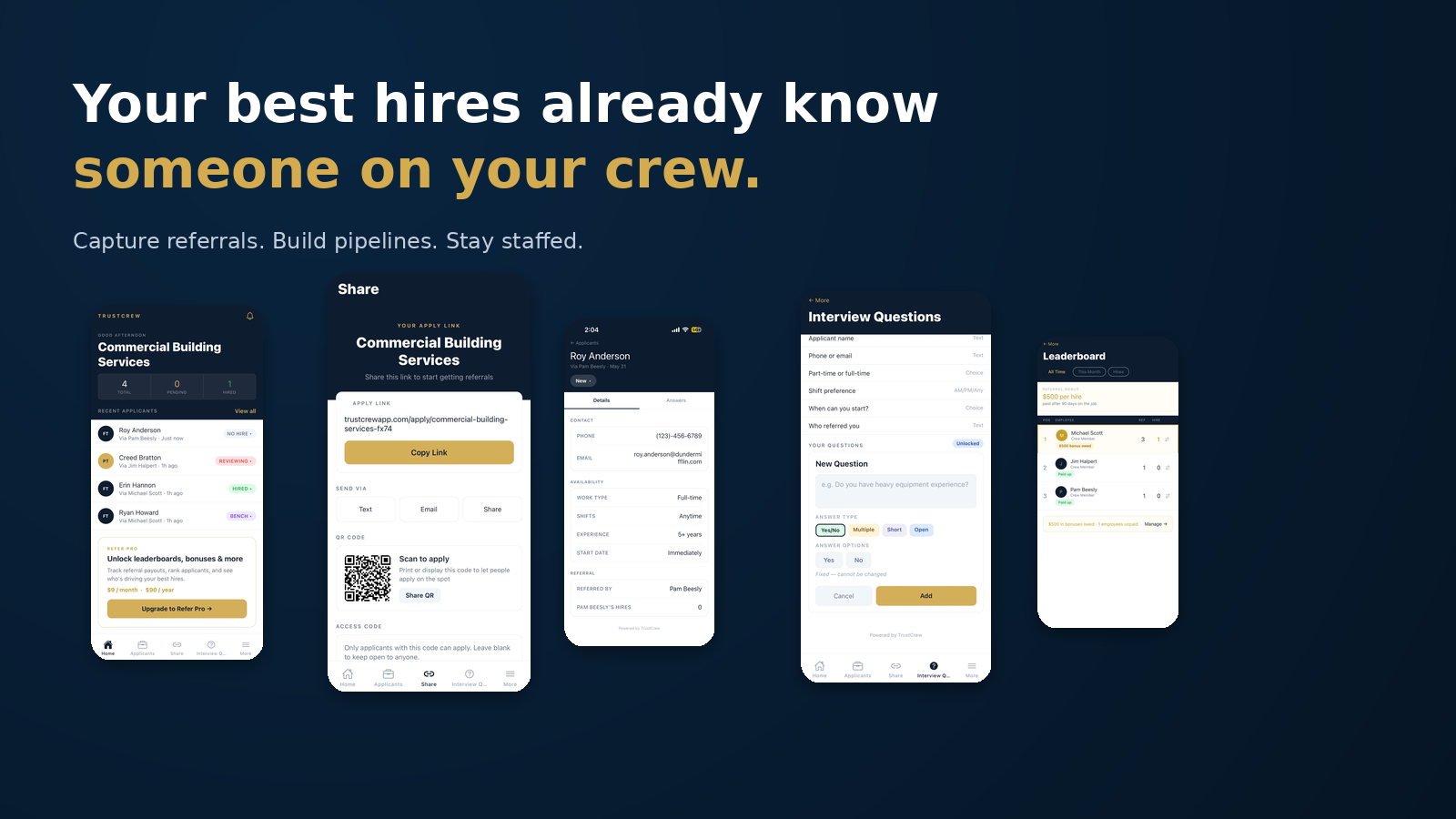
Most service businesses already receive referrals.
The problem is that referrals are almost always unmanaged.
Someone texts a manager. An employee mentions a friend at the end of a shift. A crew leader recommends a former coworker they worked with two years ago.
And then what? The message gets buried. The follow-up never happens. The candidate moves on.
That's not a referral system. That's a missed opportunity, repeated over and over.
Building a referral-based hiring pipeline means hiring becomes continuous instead of reactive. Instead of waiting until you're short-staffed and scrambling, you're continuously collecting and organizing future candidates — people who already have a connection to your team.
Here's what that looks like in practice:
Make it easy for employees to share. If sharing a job opening requires an employee to do anything complicated, they won't do it. A simple link they can text to a friend is all it takes. The lower the friction, the more referrals you get.
Track who referred who. When someone applies, you need to know how they got there. That information tells you which employees are your best recruiters, and it makes sure the right person gets credit when a referral turns into a hire.
Make the reward clear. Referral bonuses work — but only if employees know about them and trust that they'll actually get paid. Make the bonus amount visible, track the status transparently, and follow through consistently.
Follow up fast. A referred candidate is a warm lead. They already have someone vouching for them. Letting that lead go cold wastes the referral and discourages the employee who sent it.
The businesses that scale hiring successfully don't just hope referrals happen — they build a system that makes referrals the default.
That's how hiring stops feeling like starting over every month.
Hiring never stops. Stop starting over.
— The TrustCrew Team